
Introduction
In the digital world, not every threat comes from software or viruses. Some attacks target people, not machines. One of the most common examples of this is phishing.
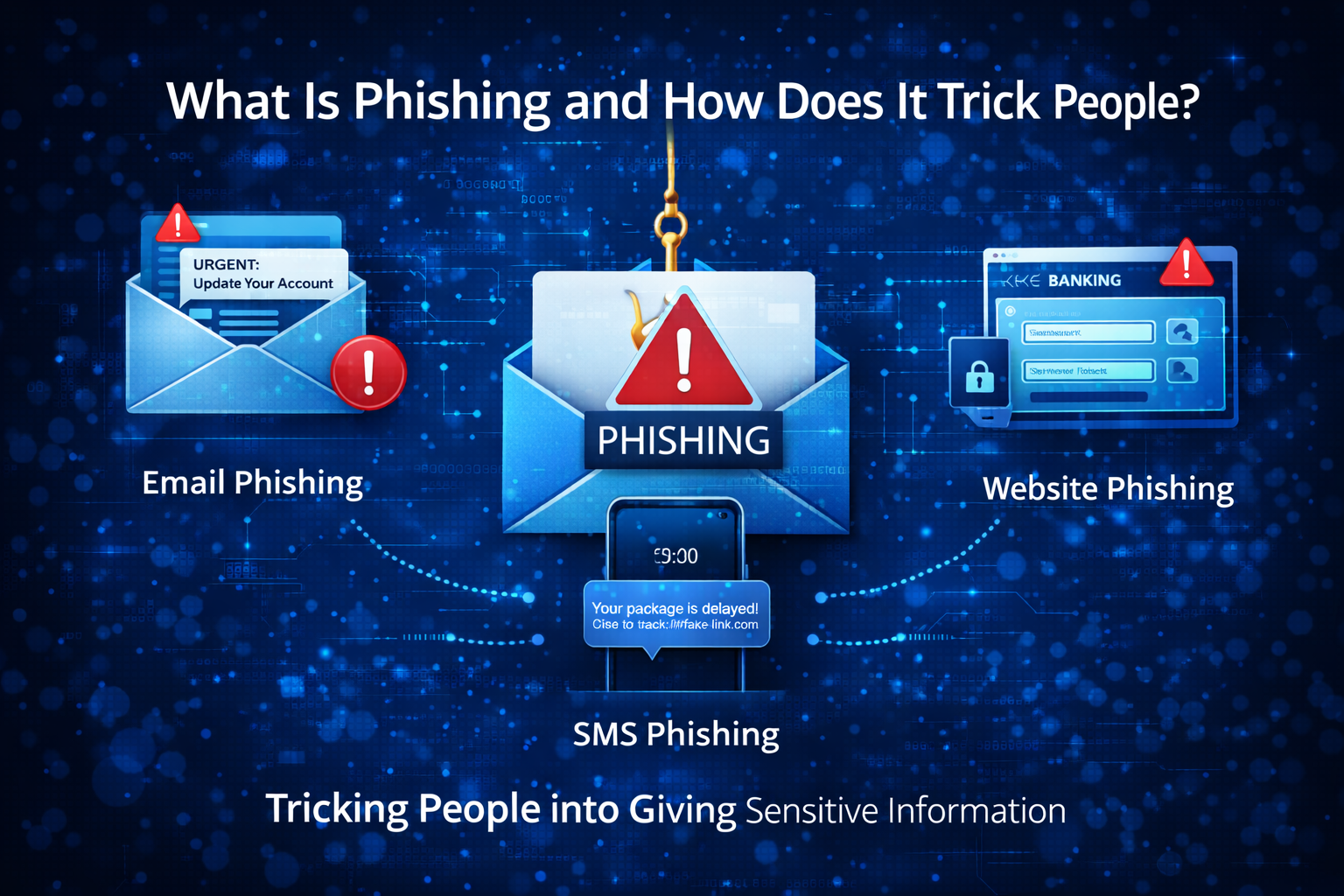
Phishing is a type of online scam where attackers try to trick users into giving away sensitive information, such as passwords, OTPs, or bank details.
Understanding Phishing in Simple Words
Phishing works by pretending to be someone you trust.
For example:
-
A fake email that looks like it came from your bank
-
A message claiming your account will be blocked
-
A link saying you won a prize or refund
The goal is to make you act quickly without thinking.
Common Types of Phishing Attacks
1. Email Phishing
Fake emails designed to look official. They may include:
-
Urgent warnings
-
Suspicious links
-
Attachments you are asked to open
2. SMS Phishing (Smishing)
Messages sent to your phone claiming:
-
Your package is delayed
-
Your account needs verification
3. Website Phishing
Fake websites that look like real ones, such as:
-
Banking login pages
-
Social media sign-in pages
Why Phishing Is So Effective
Phishing works because it:
-
Uses fear or urgency
-
Looks genuine
-
Targets human emotions
Even experienced users can fall for phishing if they are not careful.
How to Stay Safe from Phishing
You can reduce risk by following simple habits:
-
Never click unknown links
-
Check the sender’s email address carefully
-
Do not share OTPs or passwords
-
Type website addresses manually instead of clicking links
Awareness is the strongest protection.
Why Phishing Awareness Matters
Phishing attacks are increasing every year because they are:
-
Easy to perform
-
Low cost for attackers
-
Highly successful against unaware users
Learning about phishing helps protect not just you, but also your family and workplace.
Final Thoughts
Phishing shows that cybersecurity is not only about technology—it is also about human awareness. Understanding how attackers think helps us stay one step ahead.
At NoldX, our goal is to explain cybersecurity concepts in a simple and practical way so everyone can stay informed and safe online.
✅ Conclusion
Phishing is one of the most common online threats because it targets human behavior rather than technology. By understanding how phishing works and recognizing its warning signs, users can make safer decisions online.
Cybersecurity does not require technical expertise to begin with—simple awareness and cautious habits can prevent most risks. Staying informed is the first step toward digital safety.
At NoldX, we aim to explain cybersecurity concepts in a clear and easy-to-understand way so readers can stay aware and confident while using the internet.
⚠️ Disclaimer
The information provided on NoldX is for general awareness and informational purposes only. This content does not provide professional, legal, or technical advice.
NoldX does not promote or support any illegal activities. All topics discussed are intended to help readers understand how digital systems work and how to stay safe online. Readers are advised to follow applicable laws, regulations, and best practices when using technology.
RELATED ARTICLES
What Is Phishing and How Does It Trick People?
Introduction In the digital world, not every threat comes from software or viruses. Some attacks target people, not machines. One of t ...
What Is Malware? Understanding It in Simple Words
Introduction When using the internet, people often hear the word malware, but many are not sure what it really means. Malware is a common d ...


Add a Comment